

Indian Engineering at a Crossroads
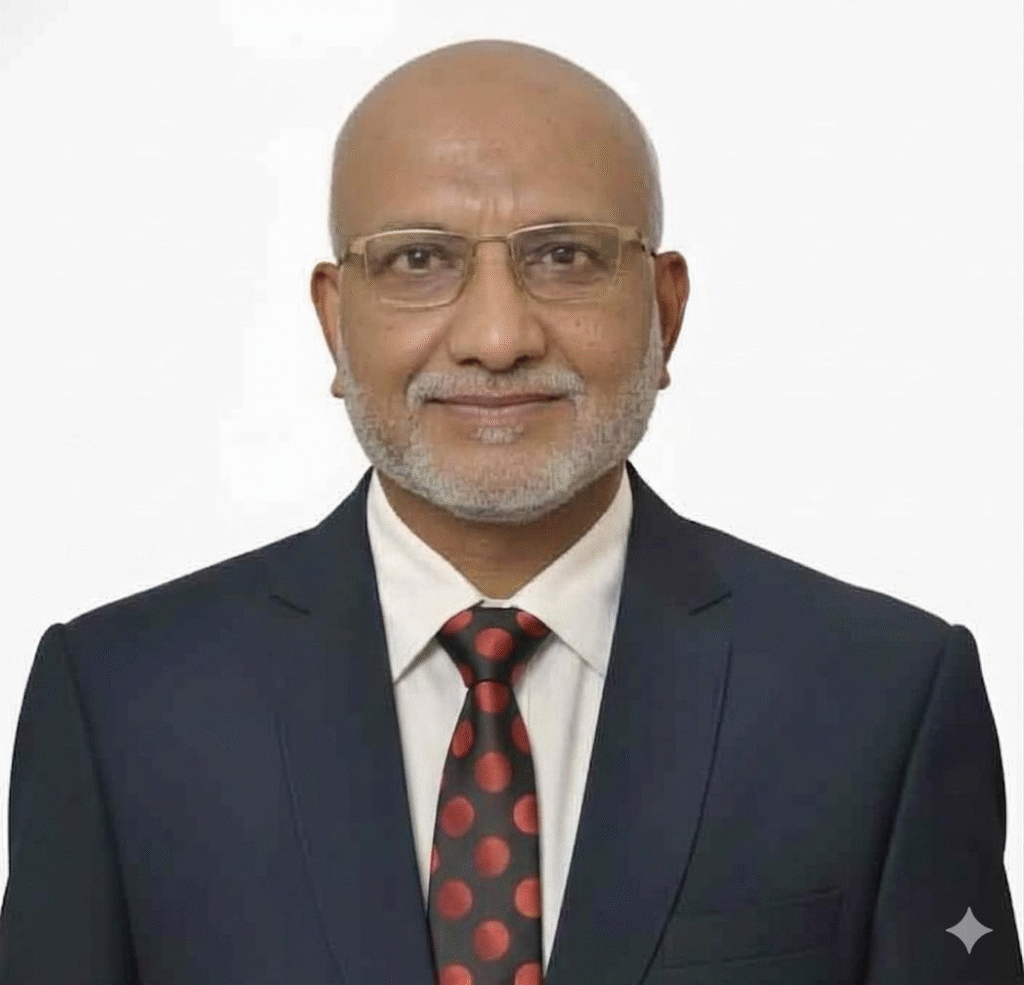
Precihole Machine Tools Pvt. Ltd.
Indian industry is entering a period of unusual contra-diction. Export opportunities remain substantial, domestic demand is resilient and the engineering sector continues to demonstrate its strength. At the same time, geopolitical conflicts, volatile energy prices, a weakening rupee and aggressive Chinese competition are placing unprecedented pressure on costs, margins and supply chains.
For Indian engineering companies, particularly MSMEs exporting to the United States and the Middle East, this is no longer a temporary disturbance. It is the new operating environment.
Geopolitics Has Become a Business Risk
The United States and the Middle East are among the most important markets for Indian engineering goods. However, both regions are now affected by geopolitical and policy uncertainty. Conflict in West Asia has made shipping routes, energy supplies and delivery schedules more vulnerable. Freight costs and insurance premiums can change quickly, while disruptions around critical sea lanes can extend transit times and block working capital for weeks.
The US market presents a different set of challenges. Changes in tariff policy, localisation requirements, sanctions, export controls and strategic trade priorities can alter the commercial viability of an order even after considerable effort has gone into its development. Indian exporters must also manage longer qualification cycles, demanding technical standards and increasing expectations regarding cybersecurity, traceability and supply-chain transparency.
Companies can no longer treat geopolitical developments as distant foreign-policy matters. They directly affect quotations, contracts, invento-ries, receivables and profitability. Exporters must build suitable escalation clauses into contracts, diversify shipping routes and customers, insure receivables where practical, and avoid excessive dependence on any single country or region.
The Double-Edged Impact of a Weaker Rupee
The weakening of the rupee is often described as beneficial to exporters. That is only partly true. Export realisations may improve in rupee terms, but a large part of Indian engineering manufacturing still depends on imported machine tools, CNC systems, electronics, cutting tools, special steels, sensors and other critical components. Their costs rise immedia-tely when the rupee falls.
Such volatility makes long-term pricing difficult. A company may win an export order based on an apparently favourable exchange rate, only to lose the advantage through higher imported-input costs, expensive freight or adverse currency movement during a long delivery period.
MSMEs therefore need formal foreign-exchange risk policies. Currency exposure should be reviewed order by order, natural hedges should be identified and forward cover used selectively. Quoting purely on the basis of the prevailing exchange rate is increasingly risky, especially for projects with extended manufacturing and payment cycles.
Energy Costs Feed Through the Entire Value Chain
Sharp increases and continuing volatility in crude oil and fuel prices affect industry far beyond the direct cost of diesel and electricity. They raise the prices of steel, aluminium, polymers, heat treatment, foundry operations, transportation, packaging and employee travel. They also increase ocean freight and weaken the rupee because India remains heavily dependent on imported crude.
Retail inflation reached 4.45% in July 2026. While still within the Reserve Bank of India’s tolerance band, rising food and energy costs can reduce household purchasing power and eventually affect industrial demand. For manufacturers, the immediate concern is margin compression. Suppliers seek price revisions, employees face a higher cost of living and customers continue to demand fixed prices and shorter deliveries.
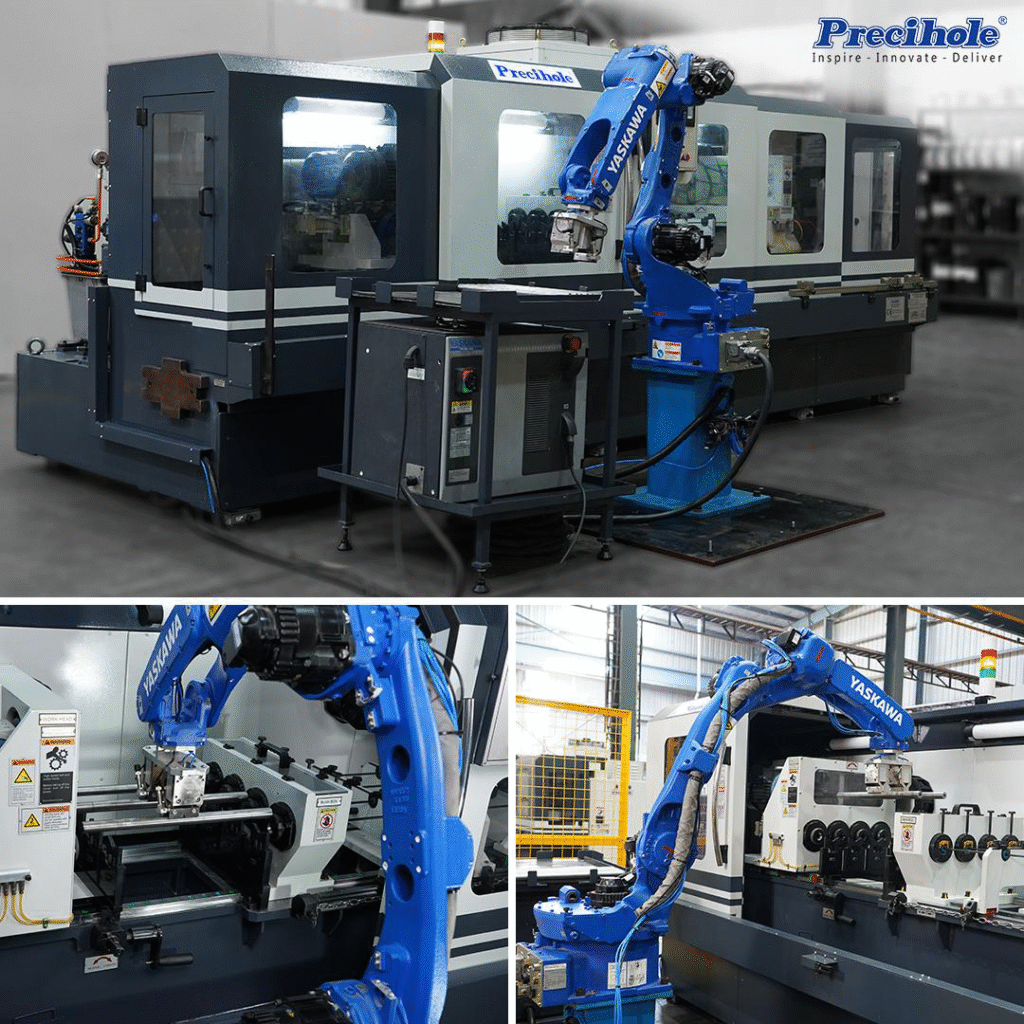
This makes energy efficiency a strategic issue. Monitoring power consumption by machine, improving utilisation, reducing compressed-air losses, adopting energy-efficient equipment and increasing the use of renewable power can produce measurable competitive gains.
Domestic Automotive Growth Provides Stability
Despite these headwinds, the Indian engineering market continues to perform well, supported by the strength of the domestic automotive sector. In FY 2025–26, passenger-vehicle sales grew by 7.9%, commercial vehicles by 12.6%, three-wheelers by 12.8% and two-wheelers by 10.7%. Passenger vehicles also recorded their highest-ever first-quarter sales in FY 2026–27.
This growth supports a wide manufac-turing ecosystem covering castings, forgings, precision components, tooling, automation, electronics and capital equipment.
Infrastructure investment, replacement demand, mobility growth and the transition towards electric and advanced vehicles are creating fresh opportunities.
India’s engineering exports also reached a record US$122.43 billion in FY 2025-26, the third consecutive annual high. This demonstrates that Indian industry has capability and market acceptance. The challenge is not a lack of opportunity; it is the ability to capture that opportunity profitably and consistently.
China: The Benchmark and the Threat
China remains the most formidable competitor for Indian manufacturing. Its advantage is not based only on low labour cost. It comes from enormous scale, dense supplier ecosystems, modern infrastructure, automation, rapid product development, strong tooling capability and an intense focus on cost and delivery. Chinese manufacturers can frequently offer complete products at prices close to, or even below, the material cost of an Indian producer. When excess Chinese capacity is redirected into overseas markets, Indian MSMEs face severe price pressure both at home and abroad. Competing only by reducing margins is not a sustainable response.
Indian industry must study China’s strengths without attempting to imitate its model blindly. Our competitive advantage should be built around engineering flexibility, application knowledge, customisation, reliability, faster service and technology-led products. The objective must be to move from being a build-to-print supplier to becoming a design,
development and problem-solving partner.
MSMEs Must Move Faster
The biggest risk for Indian MSMEs is not their size; it is delayed decision-making. Technology cycles are shortening and customer expectations are rising rapidly. Higher precision, better performance, digital documentation, shorter lead times and consistent quality are becoming basic require-ments rather than premium features.
Every engineering MSME should act on five priorities:
Invest in technology and R&D: Develop proprietary products, processes and application knowledge instead of depending indefinitely on conven-tional job work.
Digitise operations: Use ERP, production monitoring, data analytics, AI-assisted engineering and preventive maintenance to improve visibility and control.
Upgrade quality systems: Strengthen process capability, traceability, metrology and international certifications. Quality must be designed into the process, not inspected at the end.
Scale strategically: Expand capacity only where demand, technology and financial discipline are aligned. Shared facilities, clusters and partnerships can provide scale without excessive debt.
Develop people: Advanced machines alone do not create competitiveness. Companies need skilled engineers, technicians and managers who can solve problems, absorb new technology and improve continuously.
Scaling up should not mean simply adding more machines. It should mean increasing productivity, technology depth, engineering capability and value addition. The future belongs to companies that can produce more complex components with tighter tolerances, higher reliability and shorter development cycles.
Government Support Must Be Timely and Targeted
Indian manufacturers cannot confront state-supported global competition entirely on their own. The Government of India has taken several positive steps through Production Linked Incentive schemes, MSME technology and competitiveness programmes, infra-structure development, public-procurement preference and trade-remedy investigations.
However, the speed and precision of implementation will be critical. When Chinese products are dumped at unsustainable prices, anti-dumping and safeguard action must be evidence-based but fast enough to prevent irreversible damage to domestic capacity. At the same time, protection must not become a substitute for competitiveness or impose costly inputs on downstream manufacturers.
Government policy should focus on affordable long-term finance, accelerated depreciation for modern equipment, R&D incentives, common testing and technology centres, reliable power and logistics, faster standards enforcement and greater preference for genuinely value-added Indian products in public procurement. Support should reward technological capability, quality and domestic value addition rather than mere assembly.
The Road Ahead
The present environment is difficult, but it also creates a defining opportunity. Global customers are seeking resilient and diversified supply chains. India has a large domestic market, capable engineers, a growing manufacturing base and increasing international credibility.
But opportunity alone will not make India a global manufacturing leader. Industry must innovate faster, improve productivity, invest in technology and build scale with discipline. Government must ensure fair competition and create the conditions in which efficient domestic manufacturers can grow.
The choice before Indian MSMEs is clear: compete on price alone and remain vulnerable, or move decisively towards technology, precision, performance and intellectual property. Those who act now will not merely survive the present turbulence; they will help define the next phase of Indian manufacturing.
Precihole Machine Tools Pvt. Ltd.
Email : sales@precihole.com
Web : www.precihole.com
