

Intelligent Laser Engineering Solution
C. And C. Laser Engineering Pvt. Ltd.
Can you tell me more about the C & C Laser Engg intelligent solution and how it differs from other plate management solutions in the market?
C And C Laser Engineering’s Intelligent Laser Engineering Solution refers to advanced, computer-controlled laser systems such as multi-axis fiber or UV laser workstations that integrate automated motion, vision alignment, and smart software to perform high-precision cutting, welding, and marking.
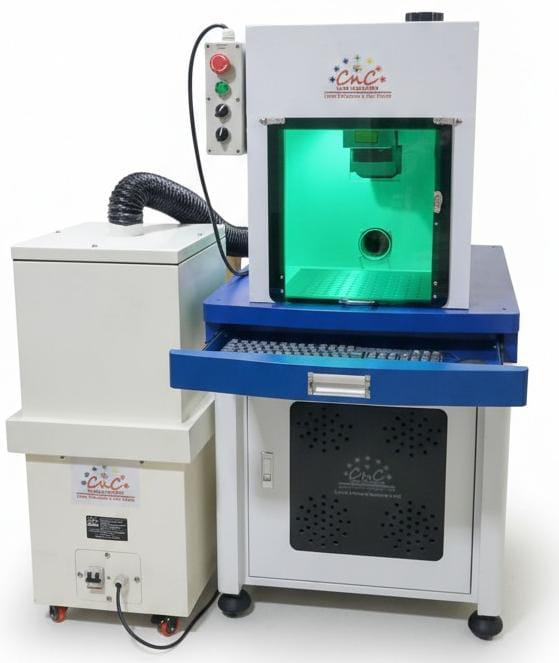
Key Features
- Non-contact processing that eliminates mechanical tool wear and workpiece distortion.
- Smart vision and motion integration to automatically locate jobs and adjust targeting.
- Multi-axis flexibility for complex micro-machining and 3D shapes.
- Custom configurations tailored to specific industry needs rather than generic, off-the-shelf templates.
How It Differs from Standard Solutions
- Customization vs. Off-the-Shelf: Specialized general solutions often force a standard machine setup onto a unique workflow. Intelligent engineering solutions are frequently custom-built around specific material constraints and application requirements.
- Adaptability vs. Fixed Paths: Standard CNC or basic laser setups rely entirely on static pre-programmed paths. Intelligent systems use integrated optics, sensors, and feedback loops to dynamically adjust to minute variations in the material.
- Automation Scale: Unlike standalone cutters, intelligent solutions bridge the gap into smart factory integration, supporting automated loading/ unloading and inline assembly line synchronization.
What are some potential opportunities for growth in the Laser industry, and how can organization stay ahead of the competition in terms of innovating and process automation?
Growth opportunities in the laser industry focus on ultrafast micro-machining, medical surgery, additive manufacturing, and electric vehicle battery production.
Organizations stay ahead by adopting AI-driven process control, smart automation, modular system designs, and continuous R&D investments in high-power Fiber Lasers, DPSS IR, Green & UV lasers (Nano – Pico – Femto – second).
Growth Opportunities
- Electric Vehicles (Evs): High demand for precision welding of battery tabs and hairpins. Transparent Plastics can be welded with our Specialized 2 µm Lasers.
- Medical Devices: Growth in micro-cutting for stents and ophthalmology surgery tools. Manufacturing Bio-Degradable Stents using our femto-second lasers is the need of the hour.
- Micro-machining: Our Ultra-short pulse lasers giving the least of Heat Affected Zone (HAZ) for fragile semiconductors and display panels micro-machining.
- Additive Manufacturing: 3D metal printing for aerospace and lightweight industrial parts. Materials that are widely used in Aerospace & Defence Industry like Polyamide, Mylar, Capton can now be micro-machined efficiently with our UV lasers.
Staying Ahead in Innovation
- Advanced R&D: Invest in multi-Kilowatt Fiber and blue/green lasers for copper welding.
- Material Science: Research how new alloys and composites react to laser energy.
- Patent Protection: Secure key intellectual property for unique beam delivery methods.
- Customer Collaboration: Co-develop custom solutions with end-users in target sectors.
Driving Process Automation
- AI and Machine Learning: Use real-time monitoring to adjust power and speed instantly.
- Robotics Integration: Pair Fiber lasers with multi-axis robotic arms for fast assembly.
- Digital Twins: Simulate laser cutting and welding paths to reduce setup waste.
- IoT Maintenance: Track component wear on laser sources to prevent sudden downtime.
How do you see the Indian industry evolving in the next decade, and what are some of the major opportunities for growth that you foresee?
Over the next decade, Indian industry is evolving from a service-led economy into a diversified powerhouse. Driven by a projected 6.5-7% annual GDP growth, rapid digital adoption, and strong manufacturing incentives, the nation is transitioning toward self-reliance, high-tech exports, and sustainable infrastructure.
Key Evolutionary Shifts
- Moving past simple product assembly toward end-to-end domestic manufacturing.
- Integrating non-fossil energy to target nearly 70% clean power capacity by 2035.
- Scaling artificial intelligence, cloud infrastructure, and real-time digital public rails across traditional industries.
Major Growth Opportunities
- Electronics and Semiconductors: Expanding local component production and fabrication backed by the Semicon India Programme.
- Renewable Energy & Storage: Scaling solar installations, green hydrogen, and grid-scale battery systems.
- Advanced Manufacturing: Growing high-margin segments including defence, aerospace, and electric vehicle components.
- Digital Services & AI: Leveraging massive talent pools in cloud computing, data analytics, and enterprise artificial intelligence
What are some key drivers of growth in the Indian manufacturing sector and how can organizations stay competitive in an increasingly digitized and automated environment.
Growth in the Indian laser manufacturing sector is primarily driven by surging demand from electric vehicle (EV) battery lines, consumer electronics, solar-cell fabrication. Organizations maintain competitiveness by adopting fiber-laser automation, AI-driven quality control, and predictive maintenance.
Key Drivers of Growth
- EV and Clean Tech Expansion: High-precision laser welding and cutting are essential for lightweight vehicle components and battery pack assembly.
- Electronics and Semiconductor Push: Micro-laser processing handles intricate wafer configurations and miniaturized smart components.
- Government Support: The Ministry of Heavy Industries and PLI initiatives accelerate advanced capital expenditures.
- Falling Costs: The decreasing total cost of ownership for fiber laser platforms encourages replacement of older, slower mechanical and plasma tools.
How to Stay Competitive
- Adopt Smart Technology: Use digital tools and automation to track and speed up factory work.
- Invest in Talent: Train workers to use new digital tools and modern machines safely.
- Build Strong Supply Chains: Use local suppliers and smart data systems to avoid delays.
- Focus on Green Practices: Save energy and reduce waste to meet global environmental rules.
Can you describe a specific example of how your company has helped a customer achieve cost savings by adopting IoT and process automation?
C And C Laser Engineering Pvt. Ltd. has time and again helped its customers to achieve cost savings by providing the process automation solutions. Although many such cases cannot be disclosed due to confidentiality contracts signed with our customers, we can site few general examples below:
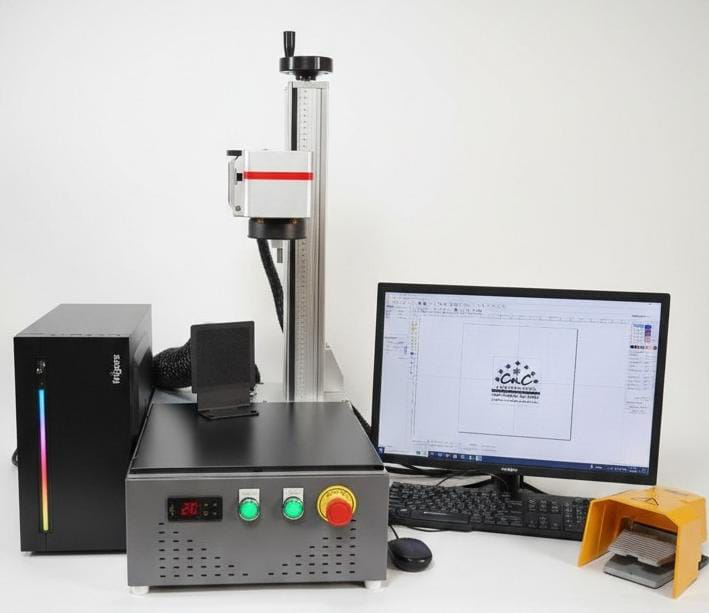
Laser marking on plates which are sized much bigger than the maximum size that the machines can mark, using X – Y motion control system in conjunction with the Galvo Head based Laser Marking Machine.
Laser marking on roll of fabric of 300 mtrs length and a width of 1.5 mtrs, using a state-of-the-art winding -unwinding system and an X – Y motion control system in conjunction with the Galvo Head based Laser Marking Machine.
C. And C. Laser Engineering Pvt. Ltd
Mob : + 91 9833105515, + 91 9699872954
Web : www.cnclaserengg.com
