

Mechanical Plate Edge Bevelling – The Key to high speed weld preparation and improved weld quality.

Gullco International India Pvt. Ltd.
With over 70 years of innovation, Gullco manufactures and delivers precision mechanized welding, cutting, and Bevelling automation systems that enhance productivity, improve safety, and ensure superior industrial weld quality.
While every manufacturer is striving for greater productivity through automation, effective welding automation begins with accurate plate edge preparation and precise fit-up. Accuracy is essential to productive heavy fabrication and reliable weld quality. Poor edge prepara-tion can cause inaccurate V joints and improper fit-ups, increasing weld deposition, heat input, consumable use and labour. These effects reduce productivity and can compromise the finished weld.
Tank Fabricators, shipbuilding and windmill tubular tower fabrication illustrate the need for consistent edge preparation. The new era of welding automation demands accurately bevelled plates. For example, producing one tower daily can demand at least 1,500 m of bevelling across three shifts, making speed, accuracy and economy critical.
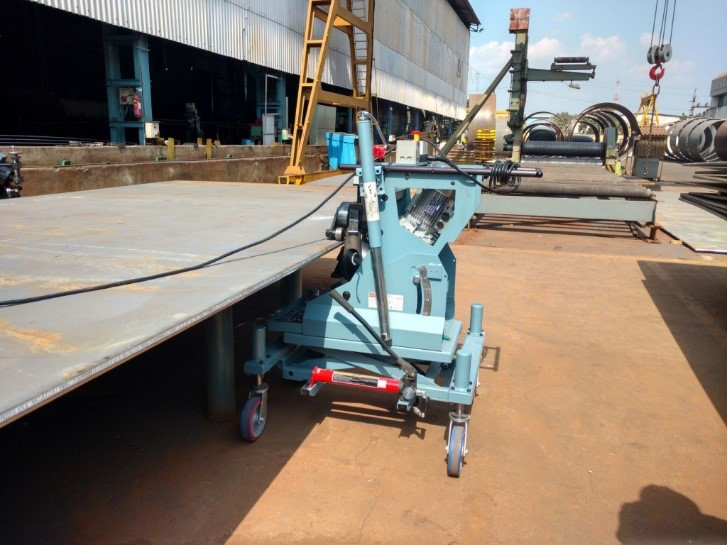
Selection of Process: Selecting the right process means balancing material type, plate thickness, cut quality, edge complexity, accuracy, production volume and allowable distortion. The preferred method must deliver the required bevel quality economically while meeting the application’s production demands.
Oxy-fuel cutting is widely used for carbon steel plates. Its equipment is relatively inexpensive and supports manual or mechanized operation. However, limitations can include slower speeds, substantial heat input and inconsistent bevel angles, potentially increasing weld deposition. Depending on material and joint requirements, further surface finishing may be necessary.
Gas consumption, grinding consuma-bles, waste and labour add to operating costs. CNC oxy-fuel systems also require plates to be transported to the machine, often involving cranes and additional handling time.
Mechanical plate edge bevelling offers an alternative. Gullco International’s portable machines use a rotary shear principle and operate at approximately 8-10 feet per minute. They can prepare plates from 6 to 50 mm thick, producing consistent V, K or X bevels across a range of fabrication applications.
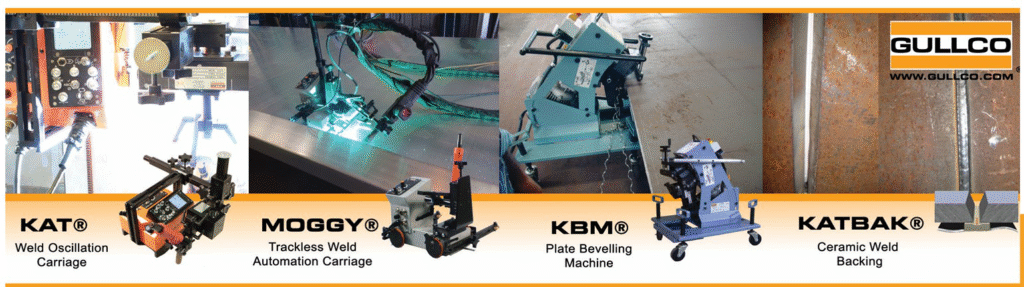
Suitable materials include carbon, alloy, stainless and high tensile steels, together with aluminium. As a non-thermal process, mechanical bevelling avoids creating a heat affected zone and prevents thermal distortion, helping maintain accurate edge geometry for subsequent welding. This makes the process relevant where minimum heat input is an important requirement.
Portability allows the machine to travel to the plate rather than requiring the plate to be moved. Self-propelling operation follows the plate edge, while a spring-loaded carriage accommodates uneven floors and plate sag. Root faces can be adjusted quickly, and five standard bevel angles are available, with non-standard angles offered within the operating range on request.
Operators can be trained in a relatively short time. For double V preparation, a standard beveller and an upside-down unit can work simultaneously on the top and bottom edges. This arrange-ment avoids turning large plates, reducing crane use, handling and repeat processing while shortening the overall production cycle.
By combining consistent preparation, portability and reduced thermal effects, mechanical bevelling can support better fit-up, improved weld quality and lower overall welding costs. Selecting equipment against actual material, joint and throughput requirements remains central to achieving these benefits in everyday fabrication work.
Gullco International India Pvt. Ltd.
Web : www.gullco.com
